 Book I
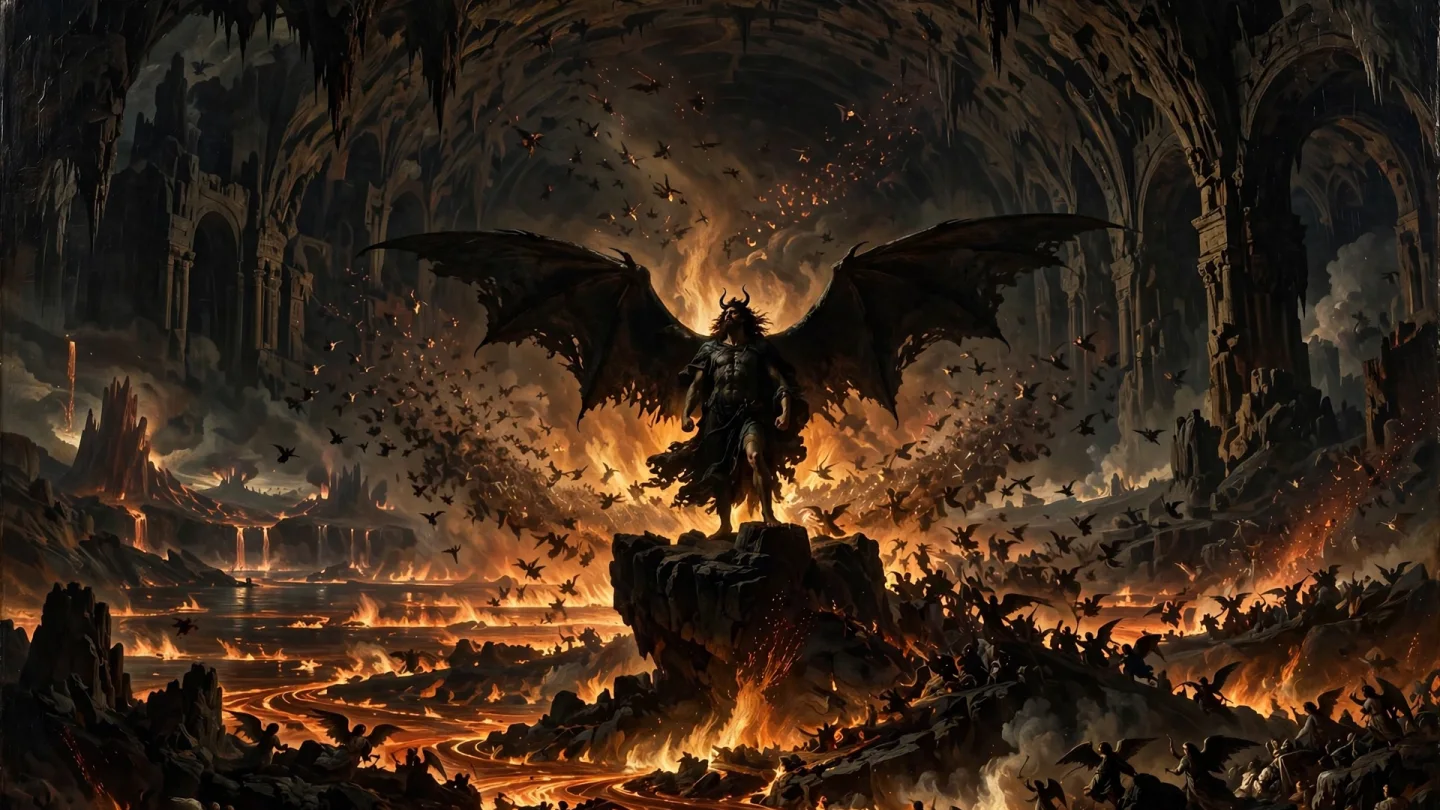
The Burning Lake and Pandemonium
The poet calls on the Heavenly Muse to sing of man's first disobedience and to justify the ways of God to men. Satan and Beelzebub wake chained on the burning lake of Hell after their…
Open Book I →John Milton · 1674 · Twelve Books
Retold in Modern English, Line for Line
Milton’s twelve-book epic at full strength — every line, image, speech, and argument preserved, with archaic grammar untangled for reading and listening. Free forever on Via Patrum.
10,566 lines · 8 hr 58 min · 73 original paintings · 12 of 12 framed videos live
Book IThe poet calls on the Heavenly Muse to sing of man's first disobedience and to justify the ways of God to men. Satan and Beelzebub wake chained on the burning lake of Hell after their…
Open Book I →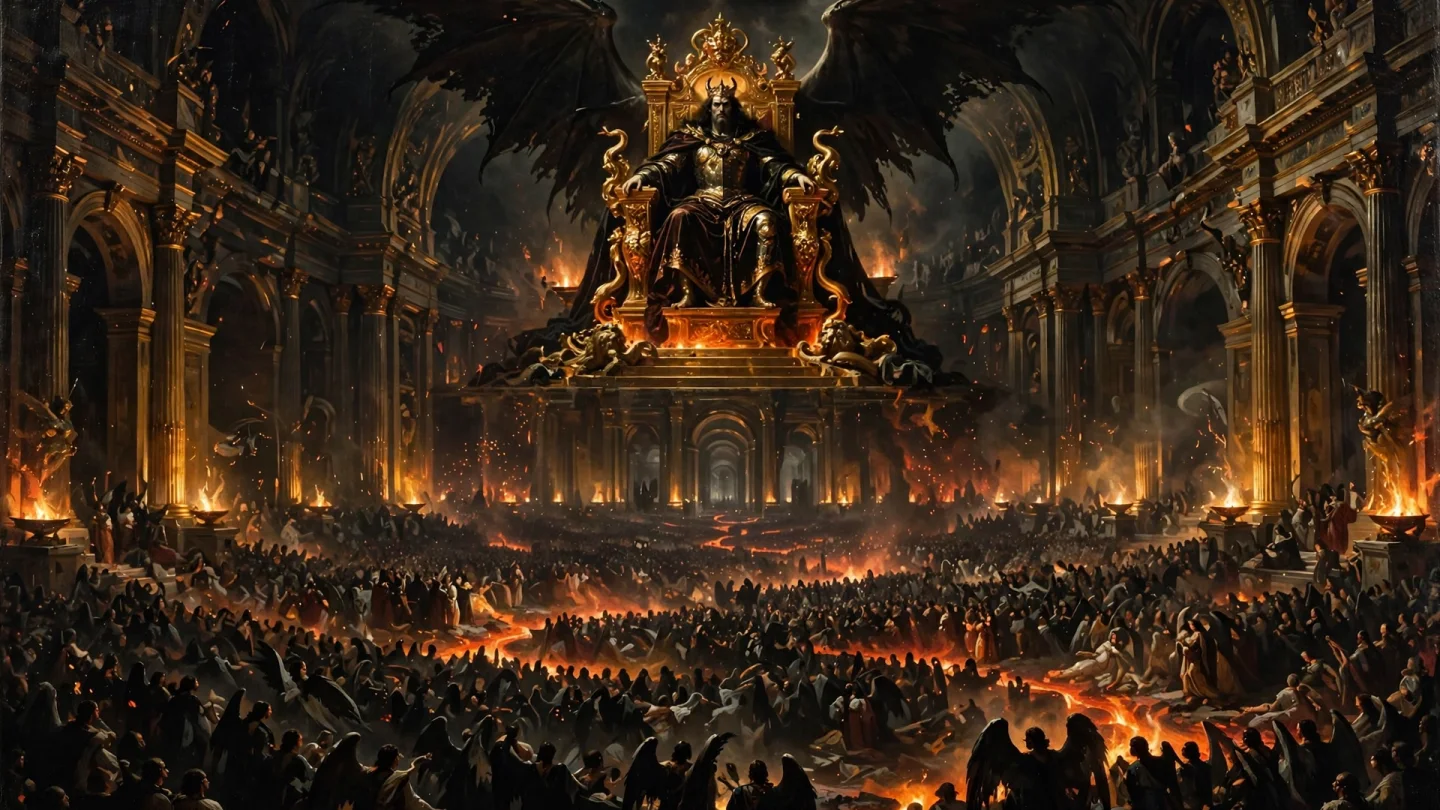 Book II
The fallen angels meet in council in Pandemonium to decide their course after defeat. Moloch urges open war, Belial counsels ease and inaction, and Mammon proposes building a rich…
Open Book II →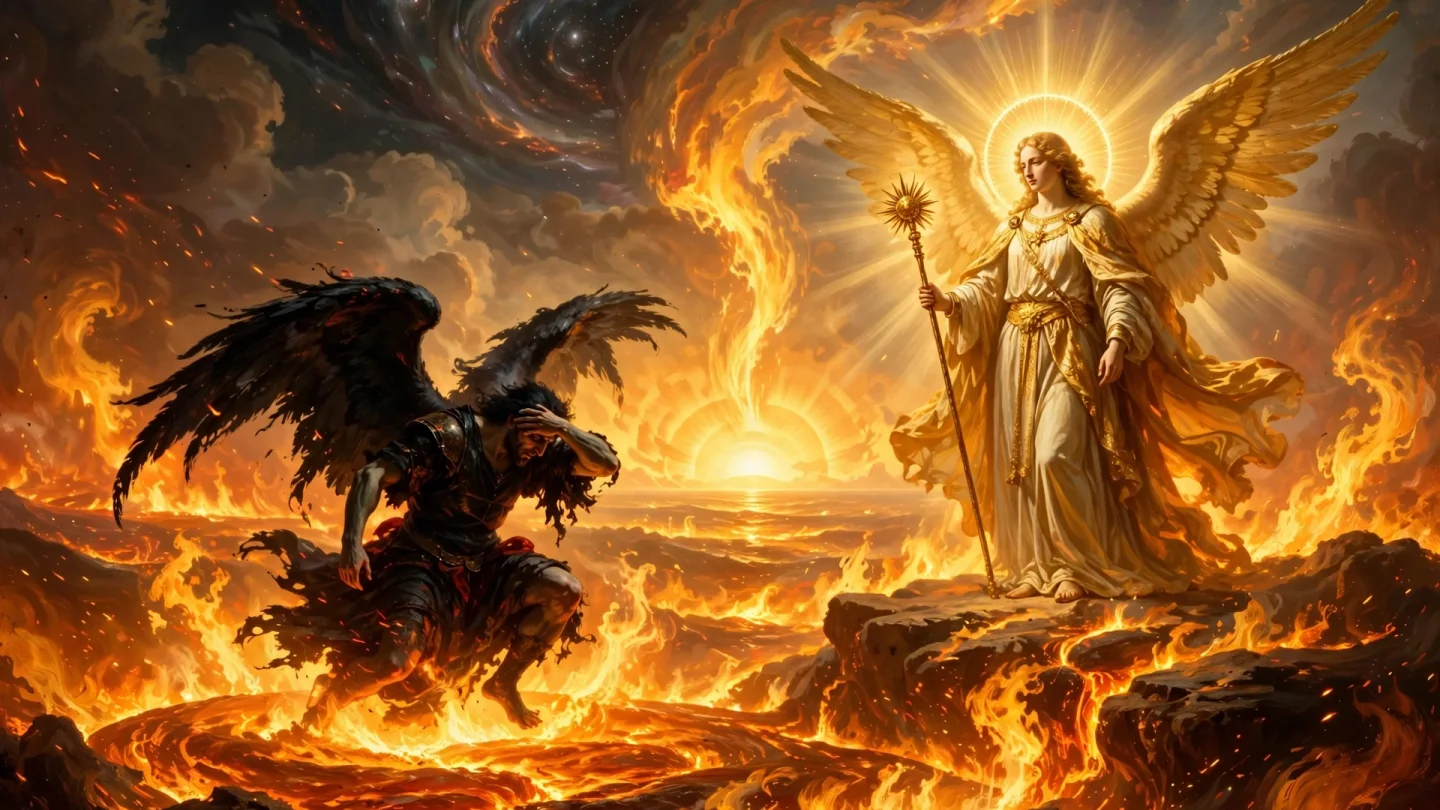 Book III
The poet invokes holy Light and asks for inward sight, since outward light no longer reaches his eyes. From His throne in Heaven, God sees Satan travelling toward the new world and tells…
Open Book III →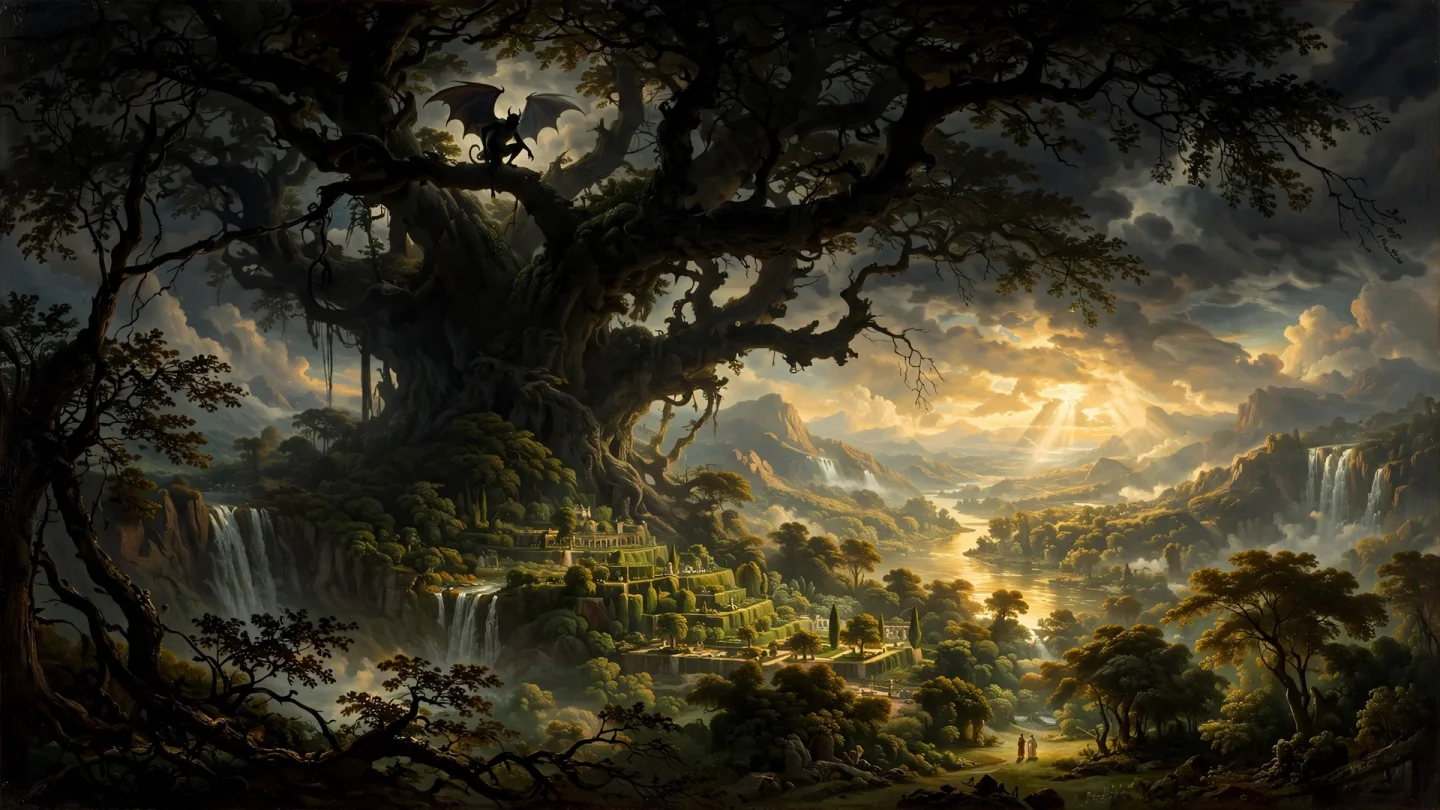 Book IV
Satan enters the new world and comes to Eden, where he first sees Adam and Eve and overhears their talk of the forbidden tree. Alone, he admits that pride alone has thrown him down…
Open Book IV →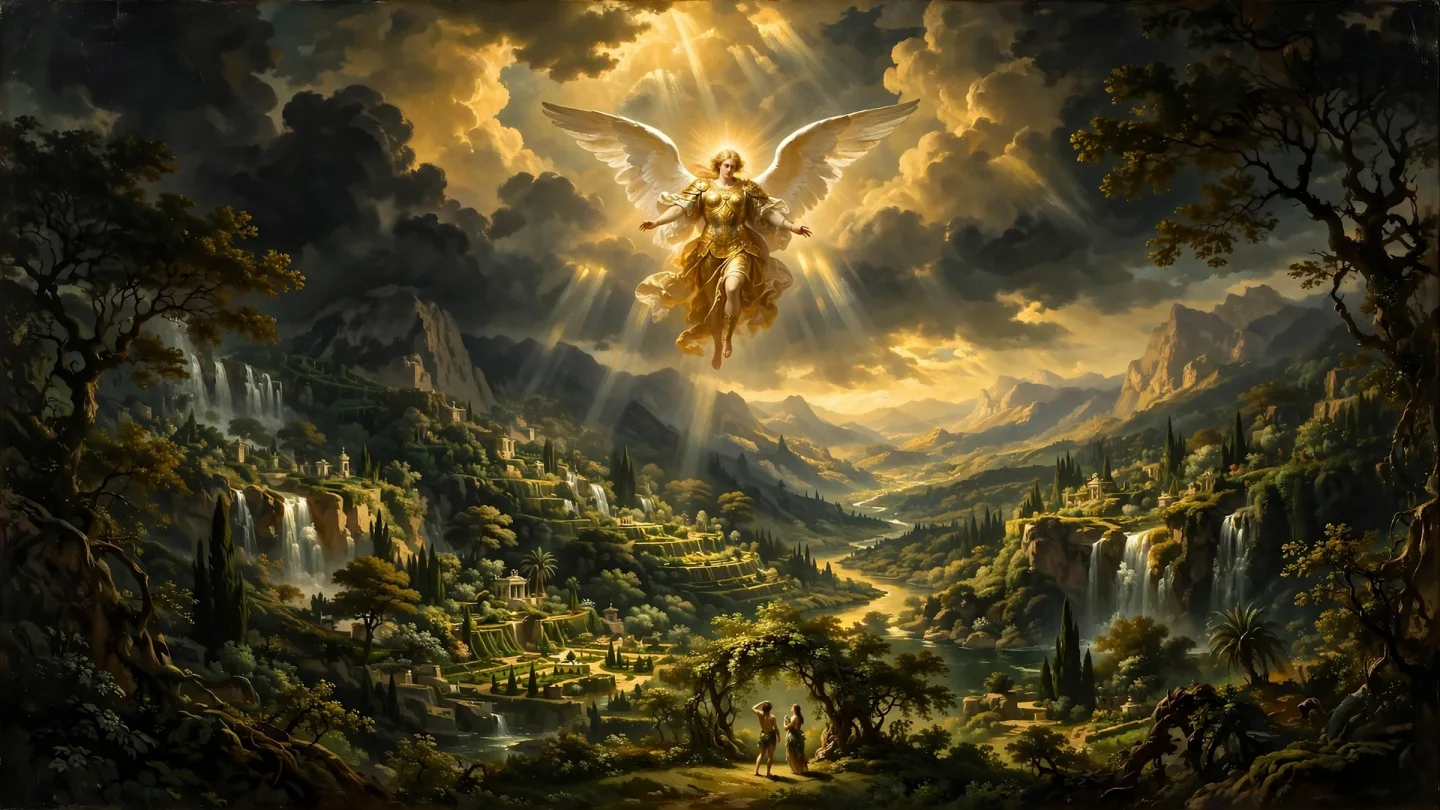 Book V
Eve wakes troubled by a dream in which a voice at her ear leads her to the forbidden tree and urges her to eat, and Adam comforts her. God sends Raphael to Eden, where the archangel eats…
Open Book V →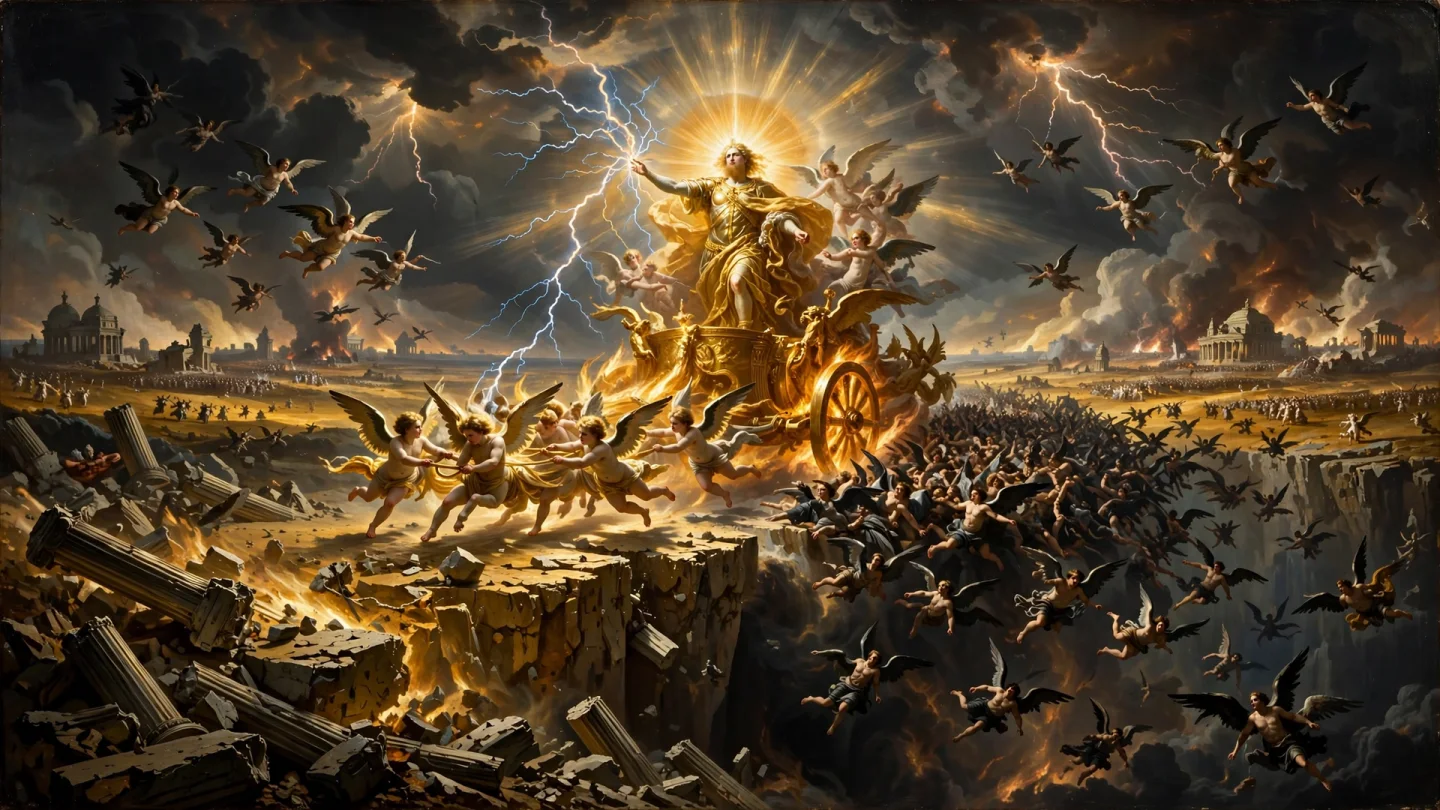 Book VI
Raphael continues his account of the war in Heaven, and Abdiel returns to a joyful welcome before God's throne. Michael and Gabriel lead the faithful angels into two days of battle…
Open Book VI →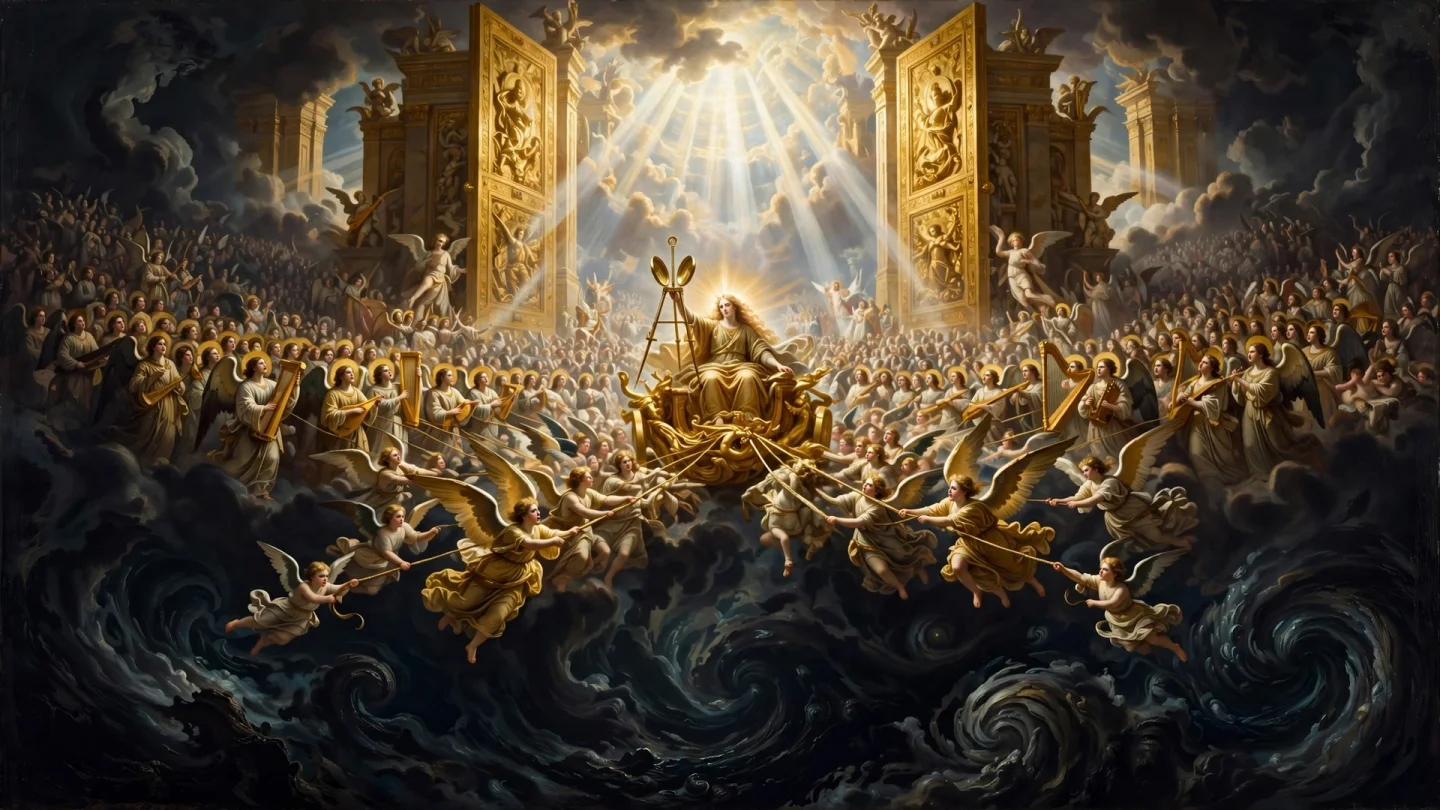 Book VII
The poet invokes Urania, the heavenly Muse, and asks to be brought safely back to earth to finish his song. Raphael then tells Adam, at Adam's request, how God sends the Son into Chaos…
Open Book VII →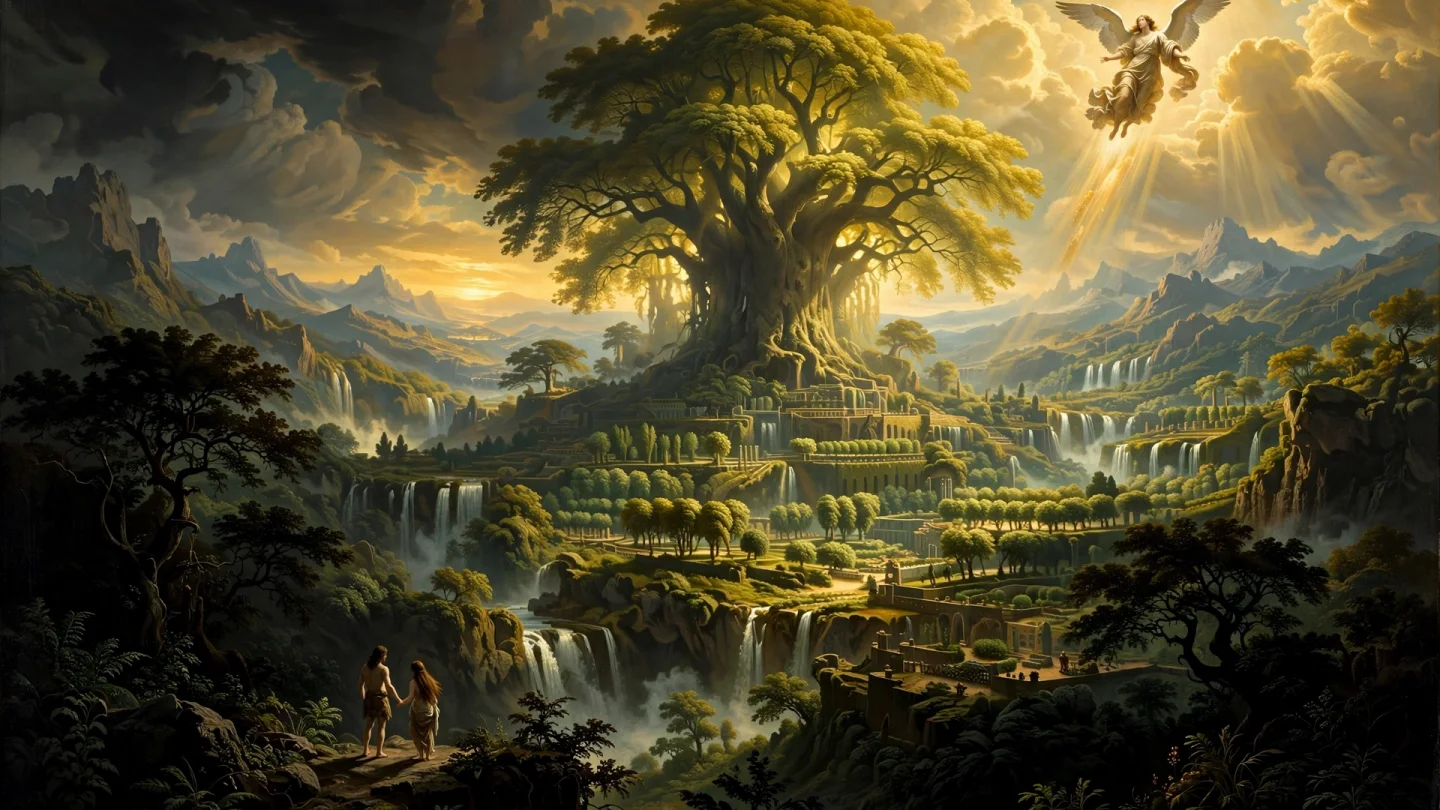 Book VIII
Adam questions Raphael about the heavens, asking why so many great shining bodies appear to travel around the small earth to give it light. Raphael answers that some knowledge God leaves…
Open Book VIII →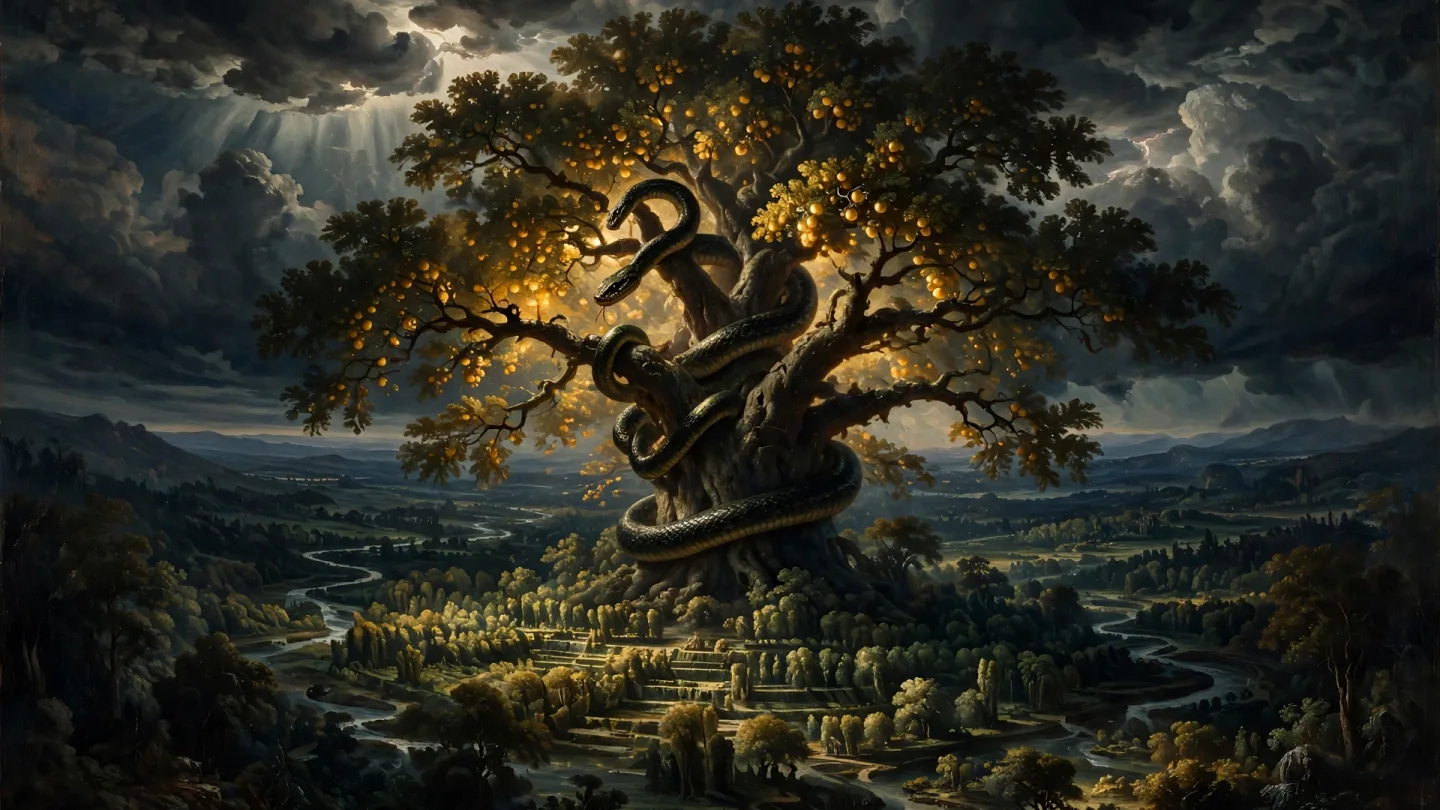 Book IX
Satan returns to Eden by night, enters the sleeping serpent, and takes the animal as his instrument. In the morning Eve persuades Adam to let them work apart, and alone at her work she…
Open Book IX →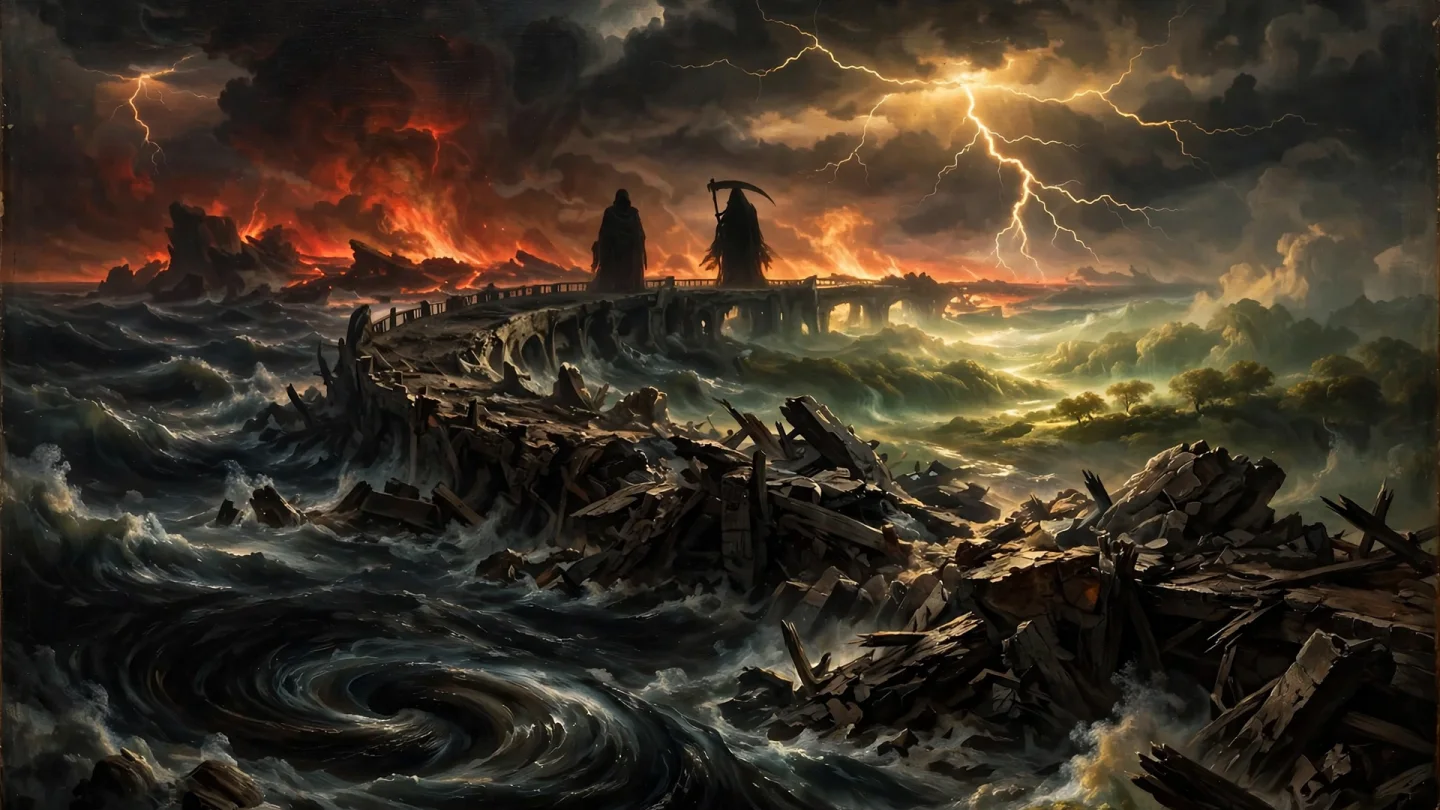 Book X
The Son descends to Eden as judge, calls Adam and Eve to account, and pronounces sentence on the serpent, on Eve, and on Adam, then clothes them with skins. Sin and Death build a broad…
Open Book X →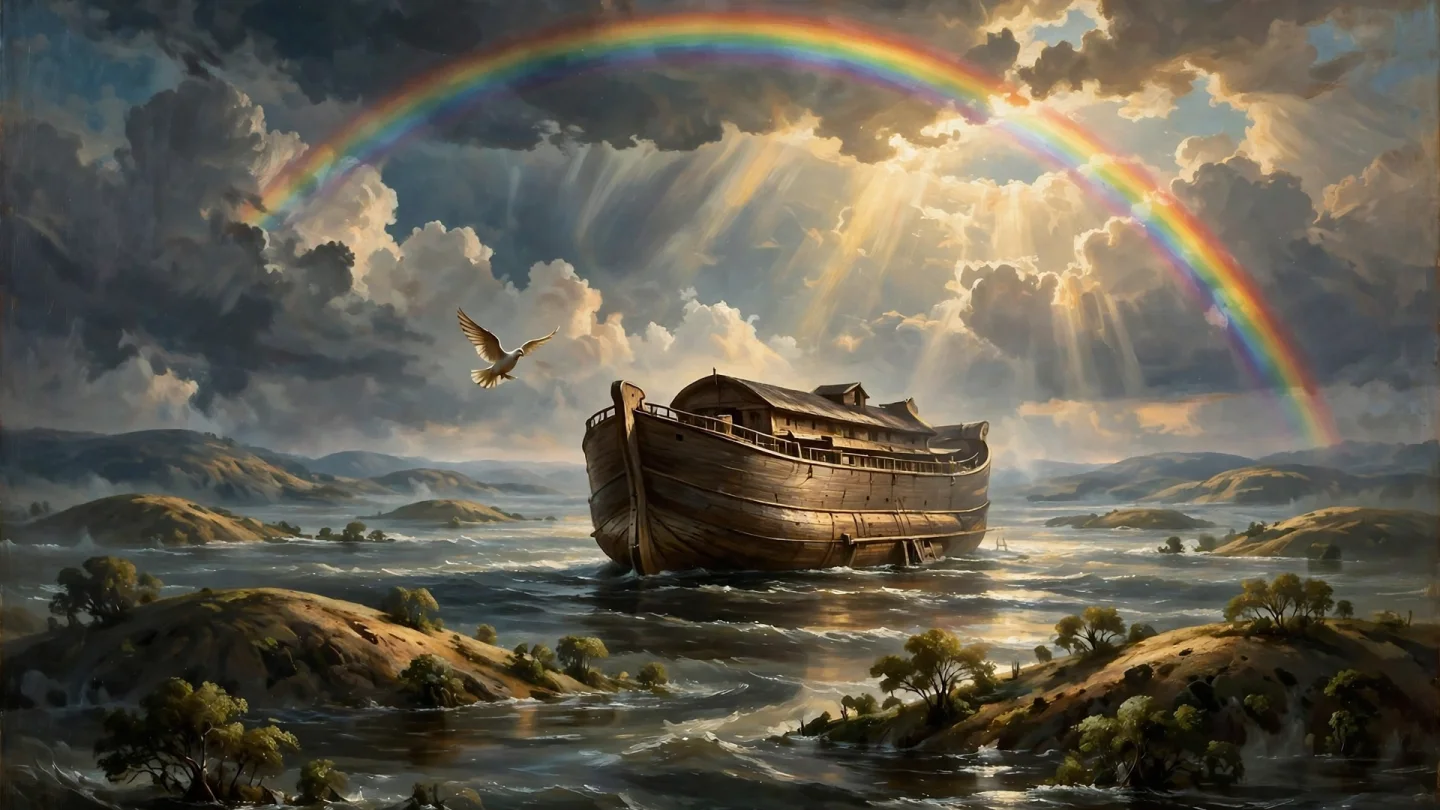 Book XI
Adam and Eve pray in repentance, and the Son presents their prayers to the Father, who accepts them but declares that they cannot remain in Paradise. God sends Michael to lead them out…
Open Book XI →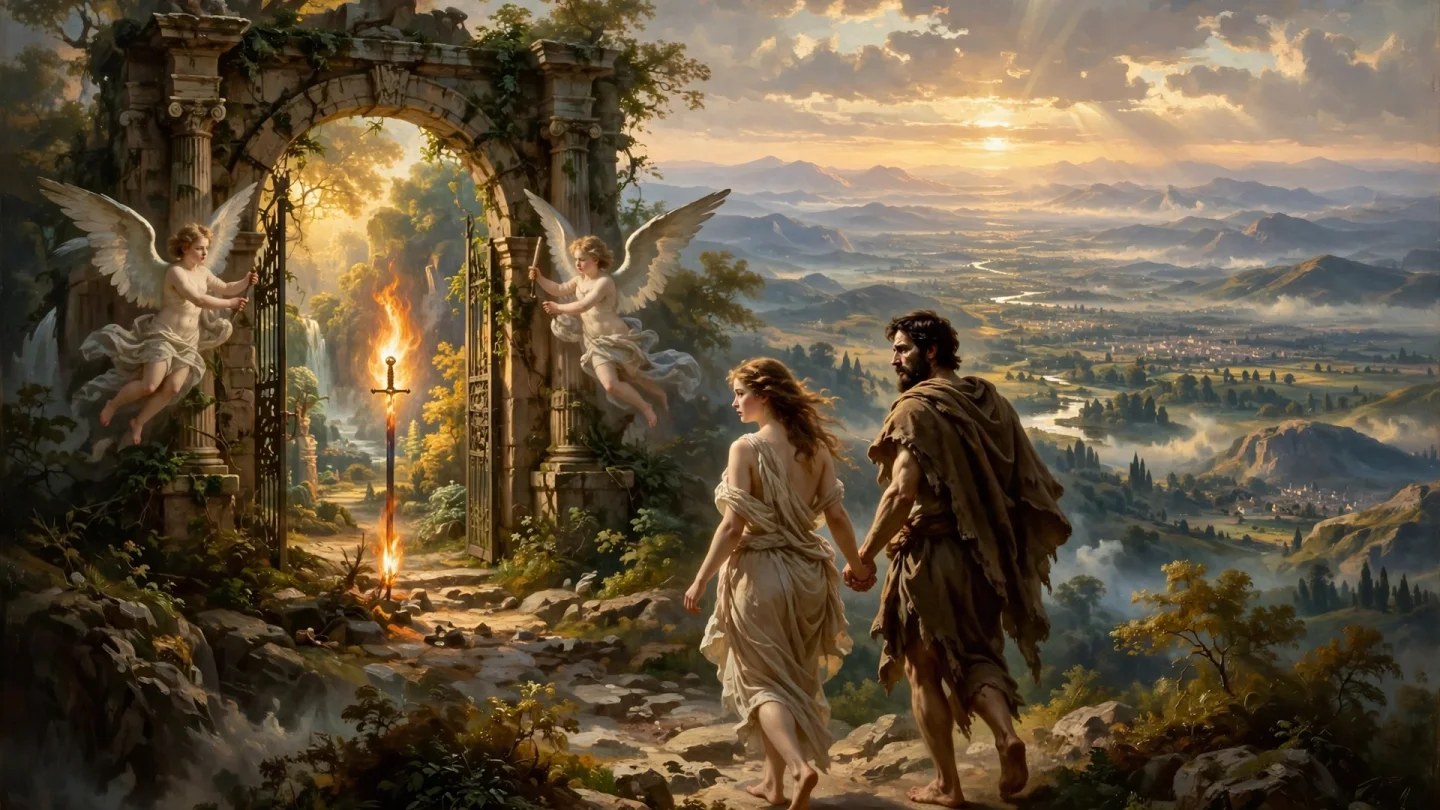 Book XII
Michael pauses and tells the rest of the future by word of mouth, since Adam's sight can bear no more visions. He tells of Nimrod, the proud ruler who begins the tower of Babel, of…
Open Book XII →General Introduction
Paradise Lost is an epic poem in twelve books, published in 1667, and widely counted the greatest long poem in English. Satan, once a glorious archangel, rebels against God, is defeated and cast into Hell, and takes revenge by corrupting God's newest creation. Adam and Eve live in innocence in Eden, are tempted by Satan as a serpent, eat the forbidden fruit, and fall. Around that fall Milton builds everything else: the war in Heaven, the creation of the world, the counsels of Hell, the judgment and mercy of God, and a final vision of history ending with Adam and Eve leaving Paradise hand in hand.
Milton states his purpose at the start: to assert Eternal Providence and to justify the ways of God to men. The poem is not a lecture. It is a story showing that God is just, his creatures are free, and evil is a real choice with real consequences. What God does with those choices, in judgment and in promised redemption through his Son, is the heart of the book.
John Milton lived from 1608 to 1674. A brilliant student, he set out early to write a great English epic and spent years preparing for it. He was also a Puritan, one of the strict reforming Protestants of his day, a fierce controversial writer, and for a time a servant of the Commonwealth, the republic that governed England after the civil war. He wrote famous defenses of liberty, including a landmark argument against censorship.
In 1652 Milton went completely blind. When the monarchy was restored in 1660, he lost his office and retired into private life, poor and blind, with his cause in ruins. It was then that he composed Paradise Lost, dictating verses composed overnight in his head to helpers each morning. The poem appeared in 1667 in ten books; in 1674, the year of his death, he divided it into twelve. A blind poet in exile wrote the English poem that sees the most.
Milton's universe is ordered, like a great house. Heaven is above, bright and solid, the home of God and the angels. Hell is below, a place of fire and darkness. Between them stretches Chaos, a wild, uncreated deep where nothing is settled. Our world hangs in that deep, suspended from Heaven by a golden chain: the stars, the sun and moon, and Earth. Eden sits in that small world, close enough to Heaven for angels to visit, and exposed enough for Satan to reach.
The shape matters. Everything has its place, and sin is, among other things, a refusal of one's place. Satan will not serve. Against that disorder Milton sets an order full of music, work, prayer, and married love. Adam and Eve's gardening, meals, evening prayers, and love for each other are described with real honor. Paradise is good, and that is why losing it hurts.
Milton borrows the machinery of Homer and Virgil, the great epic poets of ancient Greece and Rome: the invocation to a Muse, the poet's opening call for divine help in singing, the catalogues of warriors, the councils, the long journeys. Then he turns it all to Scripture. His Muse is the Heavenly Muse who inspired Moses. His true hero is not a warrior king but the Son of God, whose weapon is obedience and self-giving love. If you know the old epics you will enjoy the echoes. If you do not, the story carries itself.
Watch how Satan changes. He enters huge and blazing, a fallen archangel who can rally an army. Later he shrinks: a cormorant, a dark seabird, on the Tree of Life, a toad at Eve's ear, a serpent in the dust. Evil does not stay grand. It dwindles as it works.
Milton's English is magnificent, and four centuries old. His sentences run long, his word order is often inverted after the Latin fashion, and words like prevent and want have changed meaning since 1667. Many readers stall early, not because the story is dull, but because the grammar trips them.
This edition modernizes the poem line for line. The images, speeches, and theology stay at full strength. What changes is the dead grammar: inverted order is untangled, obsolete words become living ones, and tangled sentences run straight. Nothing is summarized or cut. It is still Milton's poem, made to be read and, above all, listened to.
Take the poem first as a story. That is the advice C. S. Lewis gave in A Preface to Paradise Lost, the short book that taught generations of ordinary readers to enjoy this poem. Lewis urged readers to let the story happen to them before taking it apart, and to hear Milton's style as solemn, formal, and ritual, like great ceremonial music rather than ordinary conversation. He was right. This verse was built for the ear. Milton, blind, composed it aloud, and it sounds best aloud.
Listen one book at a time. Do not worry about catching every reference on a first pass; the introductions in this edition carry what you need. Notice the pictures instead: light and darkness, gold and fruit, gardens and fire, images Milton uses in their old, traditional meanings, so a golden fruit carries centuries of association. Argue with Satan if you like, readers always do, and stay with Adam and Eve as long as you can before the fall.
Welcome to Paradise Lost.
John Milton published Paradise Lost in 1667, in ten books; the twelve-book form he gave it in 1674 is the one the world has read ever since. This edition keeps his poem exactly as he left it in plan and substance: every line of the original has its corresponding line here, in the same order, with the same images, the same arguments, and the same theology at the same strength. What has changed is the surface a modern reader trips over.
Spelling has been modernized throughout. Capitalization follows the modern rule of this edition: capitals are kept for persons, beings, and places, for the names and titles of God, and for personified figures who act in the story, and Milton's other noun capitals are lowercased. Names are spelled one consistent way everywhere, in the form a modern reader will recognize from a modern Bible. Punctuation has been lightened and regularized so that Milton's long sentences show their structure at a glance. Dead grammar has been translated into living grammar: thee and thou become you, hath becomes has, and Milton's tangled inversions are untangled only where they would stop a modern reader or listener cold. The verse form is untouched: blank verse, unrhymed iambic pentameter, with Milton's own variations.
The text is made to be heard as well as read. The audio edition is read by a single voice from beginning to end, and the print text and the narration are one and the same wording, so a listener can follow the page while listening.
Paradise Lost by John Milton (1608-1674), first published 1667; twelve-book edition 1674. The original poem is in the public domain. This modern English retelling, the artwork, and the narration are original to Via Patrum.
Artwork: original illustrations created for this edition, one cover and a set of scenes for each book.
Narration: a single voice throughout the poem, Kokoro am_michael.
Opening chant (audio and video editions): Rorate Caeli, performed by Inritter, CC BY-SA 4.0, via Wikimedia Commons.
A note of thanks: this edition learned how to read Milton from many teachers, and first among them C. S. Lewis, whose A Preface to Paradise Lost taught generations of readers to take the poem as a story, to hear its verse as solemn ceremonial music, and to let Milton mean what he says. The introductions to each book are written in that debt, in our own words.
Published by Via Patrum. The complete poem, text and audio, is free at viapatrum.org.